



The numbers tell a familiar story. When operators first come to us, roughly 80% of their bookings arrive through OTAs, most of them from Airbnb. Some properties sit at 90%, even 95% reliance on third-party platforms. Then there are the rare few who have climbed to 50% or 60% direct bookings, but they've spent years getting there.
The gap between 5% direct and 60% direct isn't just about revenue. It's about control, resilience, and whether you're building an asset or simply serving as inventory for someone else's marketplace.
Why Direct Relationships Matter More Than Ever
Complete reliance on OTAs creates a perpetual cost structure. Every dollar of revenue gets reduced by roughly 20% in platform fees. But the fees themselves aren't the biggest problem. The real issue is what you lose: control over your guest relationships, the ability to influence bookings during shoulder seasons, and any leverage to fill gaps in your calendar beyond adjusting prices up and down.
When your visibility depends entirely on an algorithm, you're vulnerable. If something shifts in how you rank, if your search placement drops, if you get delisted, there's nothing you can do. You're serving inventory to a marketplace that views guests as their customers, not yours.
This isn't unique to short-term rentals. Any business that relies entirely on third-party marketplaces faces the same risk. Vendors on Amazon, websites dependent on Google SEO, anyone without direct customer relationships is one algorithm change away from losing most of their traffic. The businesses that endure are the ones that own their customer data and can reach people directly.
Without a guest database, you have no lifetime value. You might have a company, but you don't have an asset with a meaningful multiple. The best businesses own their customer relationships. That's what creates value you can build on and eventually sell.
Capturing Contact Information Before the Booking
Growing your contact database starts earlier than most operators think. Your direct booking website is the first opportunity. If someone has made it to your site, they're already 90% of the way toward wanting to make a transaction. Hospitality isn't casual browsing. People don't window shop for vacation rentals the way they might browse consumer goods. When someone lands on your site, they have high intent. They want to book, and they're willing to share contact information to get closer to that goal.
Make it easy for them. Use exit intent pop-ups, embedded forms, a live chat widget, anything that creates surface area for visitors to share an email, name, or phone number. If the only action someone can take on your site is to immediately spend $1,000 or $2,000, you're missing everyone who's on the fence. Give them intermediate steps. Let them ask questions, get information, and move through a sales conversation before committing. Every interaction is a chance to capture contact information and start building a relationship.
Turning Stays Into Database Growth
Once someone has booked and arrived at your property, the opportunity to grow your database expands. The goal is to provide an excellent experience and turn that positive momentum into touchpoints that build your brand. QR codes, surveys, digital guidebooks, and check-in forms all create opportunities to collect contact information, not just from the person who booked but from everyone in their party.
Some operators have experimented with Wi-Fi capture, where guests enter their email to access the network. This can work in certain environments, but in short-term rentals, it often feels punitive. Guests don't want to trade their email for something they consider a basic utility, especially if they're paying $500 or $1,000 a night. The hardware isn't always stable enough to run this at scale, and the experience can feel like nickel-and-diming, which is one of the fastest ways to erode loyalty in hospitality.
A better approach is to make data capture feel rewarding rather than extractive. Integrate your guest portal with a loyalty platform. When guests access your digital guidebook or check in through a portal, give them a reason to share their information. Offer loyalty points, rewards, or perks for their next stay. This shifts the interaction from "give us your email to get Wi-Fi" to "join our community and get something valuable in return." The result is higher engagement and contact information from multiple people in each booking party, not just the original booker.
Why Nickel-and-Diming Kills Loyalty
Every study and best practice in hospitality points to the same conclusion: nickel-and-diming customers destroys loyalty and goodwill. Charging $20 for early check-in or late checkout might generate a little incremental revenue, but it significantly reduces the chance that a guest will book with you again.
If your only interaction with a guest is a one-time booking from an OTA, it might make sense to squeeze every dollar from that transaction. But if you're thinking about that guest as the first touchpoint in a lifetime relationship with your brand, the math changes. You build in flexibility. Check-in is at 4:00, but when they ask if they can arrive early, you say yes, complimentary at 2:00. You've already built that buffer into your operations, and now their stay starts with a moment of generosity instead of a $50 charge.
This is the difference between running a low-cost airline and building a brand people are loyal to. Spirit Airlines was profitable for years by charging for everything, but as legacy carriers improved their loyalty programs and started offering complimentary perks, they pulled market share away. People talk about their Delta status, their United status. No one brags about their Spirit status. The same dynamic applies to short-term rentals. Upsells might boost short-term revenue, but they come at the expense of long-term loyalty and brand retention.
What Airbnb Just Made Harder
As if it wasn't already hard enough to build a hospitality business, Airbnb recently removed access to guest phone numbers. When you see a booking come through, the number you receive is a VoIP number that you can't use to reach the guest after their stay. Email addresses have been obscured for years. The platform has effectively quarantined guests from ever entering your world for good. The OTAs aren't there to make it easy for you to get repeat bookings, because when you do, they get cut out.
If you've invested in building a great property and providing a phenomenal experience, you need to be able to offer that experience again and again. When the channels bringing guests to you make it adversarial to build a direct relationship, you have to do everything in your power to collect contact information while they're staying with you. Which brings us to...
The Loyalty Loop
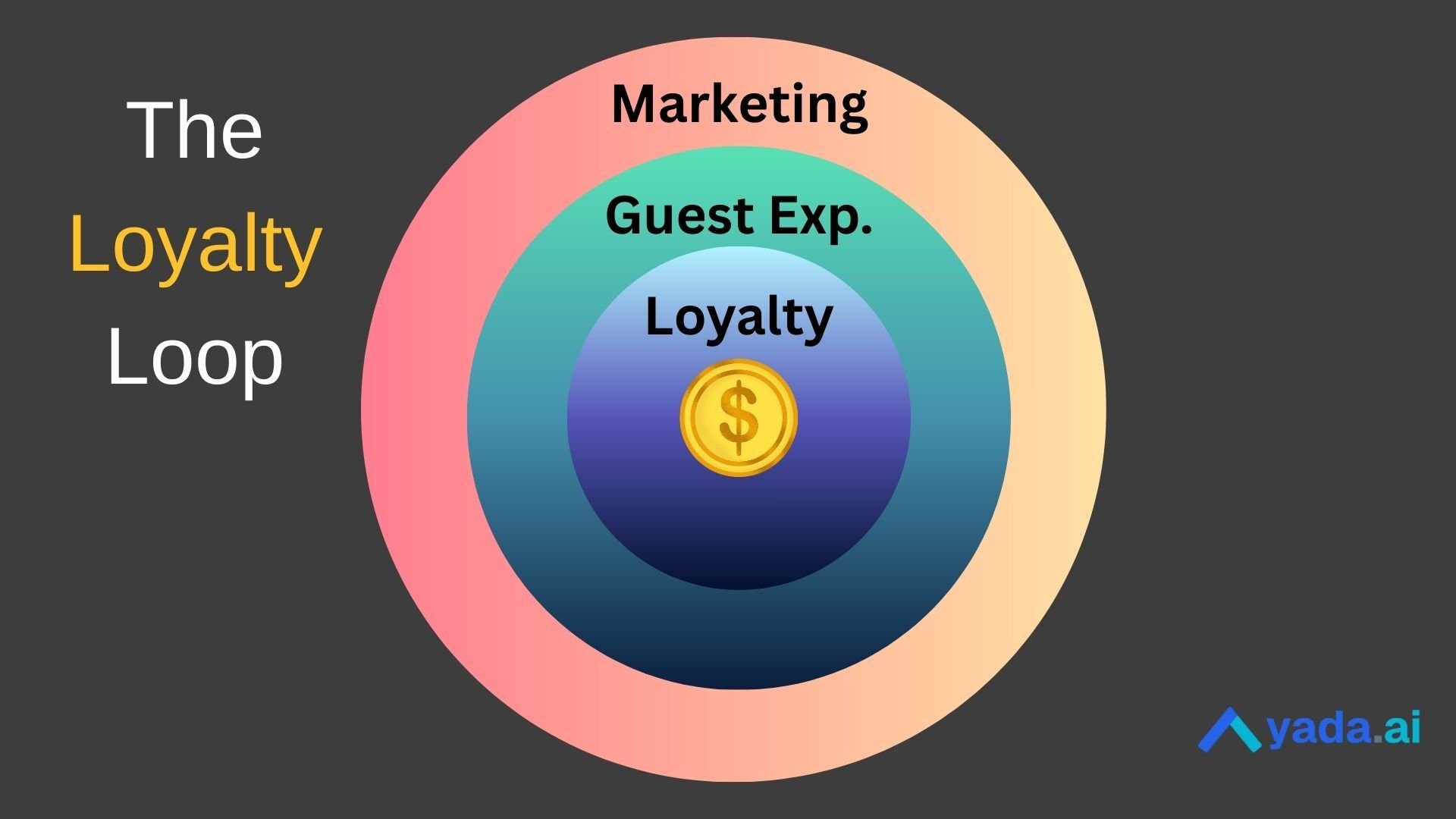
The path from one-time guest to repeat customer follows a loop. Marketing brings people to your website. They convert and book. They arrive for their stay, and you deliver a great guest experience. You don't nickel-and-dime them. You make them feel seen. You ask for feedback through surveys. You follow up a couple of weeks after their stay. You offer loyalty points and rewards. You give them perks for their next visit.
All of this drives loyalty, which feeds back into your marketing. You reach out with offers tailored to where they stayed, when they visited, and what they enjoyed. They book again. The loop continues. Each cycle amplifies the value of the relationship and increases the lifetime value of that guest.
This system only works if you own the data. If you're entirely dependent on OTAs, you can't segment your audience. You can't send an offer to everyone who stayed in your Florida properties last year. You can't remind someone who loved your Arizona rentals that you have availability during their favorite season. Without a database, you have no loop. You have a series of one-off transactions with no compounding value.
The Franken-Stack Problem
Most operators who try to build a loyalty loop or something like it end up with what we call the Franken-Stack: a marketing agency, an email platform, SMS automation, guest data capture tools, digital guidebooks, a loyalty product, a Zapier integration holding it all together, and a CRM trying to make sense of it. The monthly cost runs around $3,500, and none of these tools talk to each other well. Even with a consultant managing the data flow, you're only covering about 10% of what you actually need to do.
Your email platform can send batch emails, but it doesn't connect to your property management system. You can't segment by how much someone spent, when they stayed, or which units they booked. If you have properties in multiple locations, there's no easy way to say, "Show me everyone who stayed in Florida last year so I can send them an offer for the same property this year." Marketing agencies might try to extract data from your PMS and build segments in Excel or Airtable, but it's clunky, expensive, and incomplete.
The gap between having the data and doing something effective with it remains enormous, even with a large, expensive stack.
Marketing Without Fear
Some operators hesitate to do marketing because they're afraid of getting penalized by Airbnb or annoying past guests. The compliance concern is understandable, but if someone has opted in to receive messages from you, you're fully compliant. They interacted with your brand. They gave you their contact information. They want to hear from you. As long as you include an unsubscribe link or a way to opt out, you're following the rules.
Will you annoy someone? Maybe 1% of your list will be irritated and unsubscribe. But about 10% will be genuinely happy you reached out, and the remaining 89% won't mind. They'll see your brand name, and next time they're looking to book, you'll be top of mind. That's the entire point.
One operator sent a winter offer to past guests at properties in northern Ontario. One recipient replied that his wife hates the cold and would only visit for fall colors. Three days later, they booked for October. The winter offer didn't land, but it started a conversation that led to a booking. That's what happens when you stay in touch with people and market to past guests who already know and trust you.
Hospitality Is About Conversations, Not Transactions
At the end of the day, hospitality is about memories and conversations, not value extraction. It's about giving guests a great reason to come back and then seeing them return again and again. Building a guest database isn't just a marketing tactic. It's how you create a business with real equity, real relationships, and real control over your future.
If 80% or 90% of your bookings come from OTAs right now, that's okay. It's where most operators start. But every guest who stays with you is an opportunity to shift that balance. Capture their information. Treat them well. Stay in touch. Offer them something valuable. Build the loop.
The operators at 60% direct didn't get there overnight, but they got there by doing this work consistently. You can too.